How Art Fairs Differ From Galleries, Studios, and Open Calls
Art fairs, galleries, studios, and open calls all help art reach viewers, but they do different jobs. The simplest distinction is this: fairs concentrate many galleries and buyers in one short event, galleries build ongoing representation and sales relationships, studios show the artist’s working world, and open calls are application-based opportunities.
Quick read before you choose a path
An art fair is best for concentrated discovery, a gallery is best for sustained context, a studio visit is best for understanding process, and an open call is best for entering a juried opportunity. For a beginner, the smartest move is not to rank them by prestige but to match each format to the decision you need to make.
The four formats in plain language
An art fair is usually a temporary marketplace and meeting point. A major fair such as Art Basel in Basel brings together hundreds of galleries and thousands of artists for a few intense days, so the visitor sees a compressed version of the international gallery ecosystem. The booths are not usually artist-run tables. They are presented by galleries, advisers, publishers, or organizations that have already selected the work they want to show.
A gallery is a year-round space or program. It may mount solo and group exhibitions, cultivate collectors, place works in institutions, write press materials, and develop a long-term narrative around an artist’s practice. A gallery visit is slower than a fair visit because the show is curated as a single argument or focused selection, not as one booth among many.
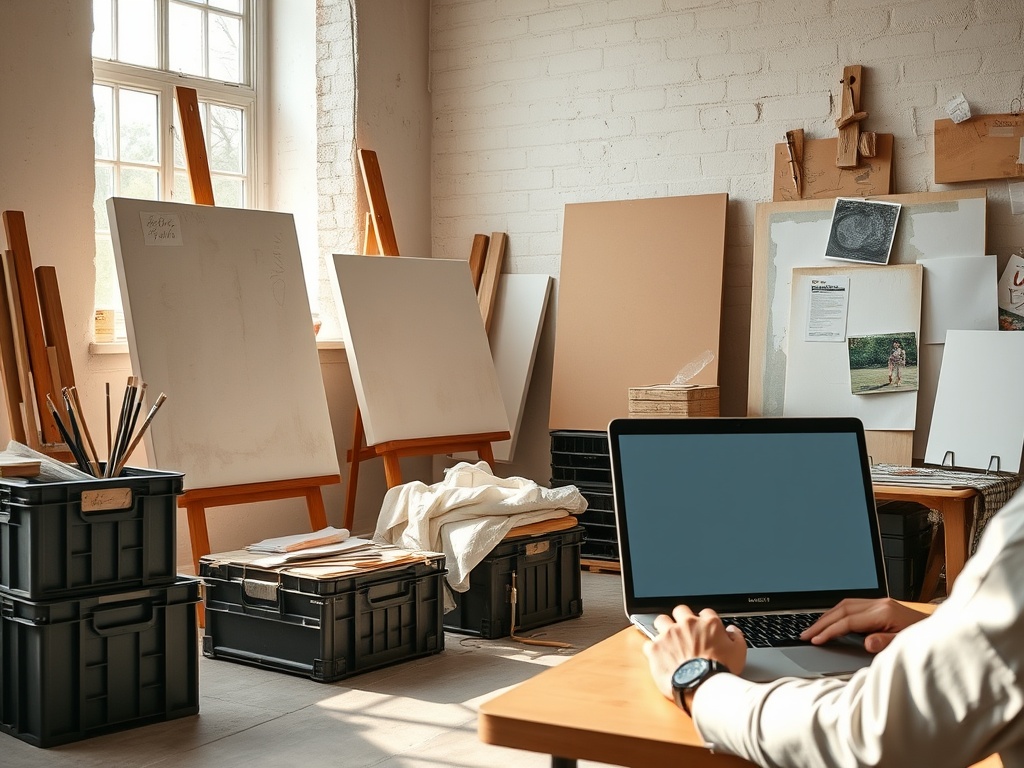
A studio is where art is made, stored, tested, repaired, or abandoned. Studio visits are often less polished than gallery visits, which is the point. They let curators, collectors, critics, or peers see works in progress and hear how an artist thinks before the work becomes exhibition-ready. Studio settings can also reveal scale, materials, false starts, and research that a finished gallery installation may hide.
An open call is an invitation to apply. It might be for an exhibition, residency, prize, public art commission, publication, or grant. Listings from organizations such as the College Art Association opportunities board or curated databases like Artwork Archive calls for entry show how varied these opportunities can be. Unlike a fair or gallery visit, an open call usually starts with paperwork: eligibility, images, statement, deadline, fee, and selection criteria.
How the audience changes the experience
At a fair, the audience is mixed but fast-moving. Collectors, curators, advisers, press, artists, and curious visitors may all pass through the same aisle. That creates energy, but it also creates surface-level viewing. A booth must communicate quickly, so labels, scale, and placement matter. This is why a fair can feel exciting and exhausting at the same time.
At a gallery, the audience has more room to look. The staff may know the work deeply, and the exhibition text can guide interpretation without the crowd pressure of a fair. If your main question is “How does this artist’s work hold together across a body of work?” a gallery usually answers better than a fair booth.
At a studio, the audience is usually smaller and more intentional. The conversation may move from finished work to experiments, sketches, tools, and deadlines. For viewers trying to understand an artist’s development, the studio can be more revealing than a polished exhibition. For artists, though, the informality requires judgment. Not every visitor needs to see every unfinished idea.
Open calls have an invisible audience: the jurors, curators, administrators, or reviewers who evaluate submissions. The viewer experience comes later if the application succeeds. That makes open calls useful but also easy to misunderstand. A rejection may reflect fit, timing, eligibility, budget, geography, or theme, not simply the quality of the art.
A comparison that helps beginners decide
| Format | Best for | Main trade-off | What to prepare |
|---|---|---|---|
| Art fair | Seeing many gallery programs quickly | Can feel crowded and commercially intense | Shortlist booths, wear comfortable shoes, ask concise questions |
| Gallery | Understanding a curated exhibition or artist relationship | Less variety in one visit | Read the exhibition page, give works time, ask for the checklist |
| Studio | Seeing process, scale, and works in progress | Less formal and sometimes private | Respect time, ask before photographing, follow up thoughtfully |
| Open call | Applying for opportunities | Requires admin work and may involve fees | Check eligibility, image specs, deadlines, and rights terms |
Why art fairs can look more commercial
Fairs concentrate costs and attention. Galleries pay for booths, shipping, insurance, staffing, travel, and installation, so sales pressure is real. That does not mean every fair booth is shallow. Many strong curatorial presentations happen at fairs, and some fairs include talks, commissions, nonprofit sections, or experimental programs. Still, the format rewards clarity, speed, and market readiness.
This is where visitors sometimes confuse the fair with the whole art world. A fair shows one slice: works that galleries choose to present under temporary, high-visibility conditions. If you want a more patient entry point into visual culture, you might pair a fair visit with museum planning advice such as 7 Mistakes Visitors Make With Timed Entry, Photography Rules, and Audio Guides. That gives you a calmer way to compare market, institutional, and public-facing art experiences.
Why galleries are not just shops
Galleries do sell art, but serious gallery work includes interpretation, artist support, documentation, placement, and long-term relationship building. A gallery may help an artist produce a show, place work in a collection, arrange press, or connect with curators. The public gallery visit is only the visible layer. Behind it sits a network of studio visits, collector conversations, installation decisions, and career strategy.
A useful gallery question is not “How much is this?” as a first move. Better beginner questions include “Is there a checklist?” “Is this part of a larger series?” and “Are there installation images or essays I can read later?” Those questions invite context rather than forcing a sales conversation.
Studios reveal process, but need boundaries
Studios can be generous spaces, yet they are also workspaces. For artists, an open studio event can build local visibility and invite informal feedback. A private studio visit can create deeper professional relationships. The risk is showing too much too early or letting visitors steer unfinished work. A helpful boundary is to prepare a few works or groups of works you are ready to discuss, while keeping experiments that still need privacy out of view.
For visitors, studio etiquette is simple: arrive on time, do not touch materials without permission, ask before taking photos, and avoid treating unfinished work as if it were a final public statement. If you are thinking about how presentation tools shape creative decisions, How Style Frames, Moodboards, and Art Direction Actually Work Together is a useful next read because it explains how early visual references become shared direction.
Open calls are opportunities, not guarantees
Open calls are attractive because they appear accessible. They can be, especially for emerging artists who lack gallery representation. But each call has a purpose. A residency may want research fit, a juried show may want finished work, a public art call may need budget experience, and a grant may require community impact. Beginners should read the criteria twice before submitting.
The most common mistake is applying because the title sounds exciting, not because the fit is strong. Look for eligibility, location, fee, commission rate, shipping responsibility, insurance, image rights, and timeline. If those terms are unclear, ask before paying an application fee. A careful application to fewer well-matched calls usually beats a rushed application to many.
Choosing the right format for your goal
If your goal is discovery, start with fairs and galleries. Use fairs to sample many programs quickly, then visit galleries to slow down. If your goal is understanding how art is made, seek studio visits, open studios, artist talks, or process-focused exhibitions. If your goal is participation, study open calls and build a reusable submission kit.
For artists, these formats can work together. An open call may lead to an exhibition, an exhibition may lead to a studio visit, a studio visit may lead to gallery interest, and a gallery may eventually show work at a fair. The path is rarely linear. It depends on fit, timing, relationships, and the work itself.
A practical viewing plan for your next art week
Choose one fair or large event for breadth, two galleries for depth, and one studio or artist-run space for process. Keep notes on what each format helped you understand. Did the fair reveal trends? Did the gallery clarify an artist’s language? Did the studio make the work feel more human? Did an open call show a route into participation?
That small comparison will teach you more than trying to see everything. Start with the format that matches your immediate question, then use the others to fill in the context.