Powdery Mildew: Causes, Prevention, and Treatment
Powdery mildew is best managed by combining accurate identification, better growing conditions, resistant plants, and early treatment when needed. The white coating is easy to recognize, but the right response depends on the plant, the severity of infection, local weather, and the product label if a fungicide is used.
Mildew in a Minute
- Powdery mildew is a group of fungal diseases that produces white or gray powdery growth on leaves, shoots, flowers, and sometimes fruit.
- Unlike many foliar diseases, many powdery mildew fungi can infect without free water sitting on the leaf surface.
- Prevention usually starts with sunlight, spacing, airflow, balanced fertility, and resistant varieties.
- Mild infections may be handled with cultural controls; more persistent problems may require a labeled fungicide used at the correct timing.
- Treatment is plant-specific. A product that is appropriate for roses may not be labeled for an edible crop.
What Powdery Mildew Actually Is
Powdery mildew is not one single fungus. Different fungi in this disease group infect different hosts, which is why a mildew problem on squash is not necessarily the same organism affecting a rose nearby. The common visual clue is a dusty white or gray coating that often begins as small patches and expands over the leaf surface.
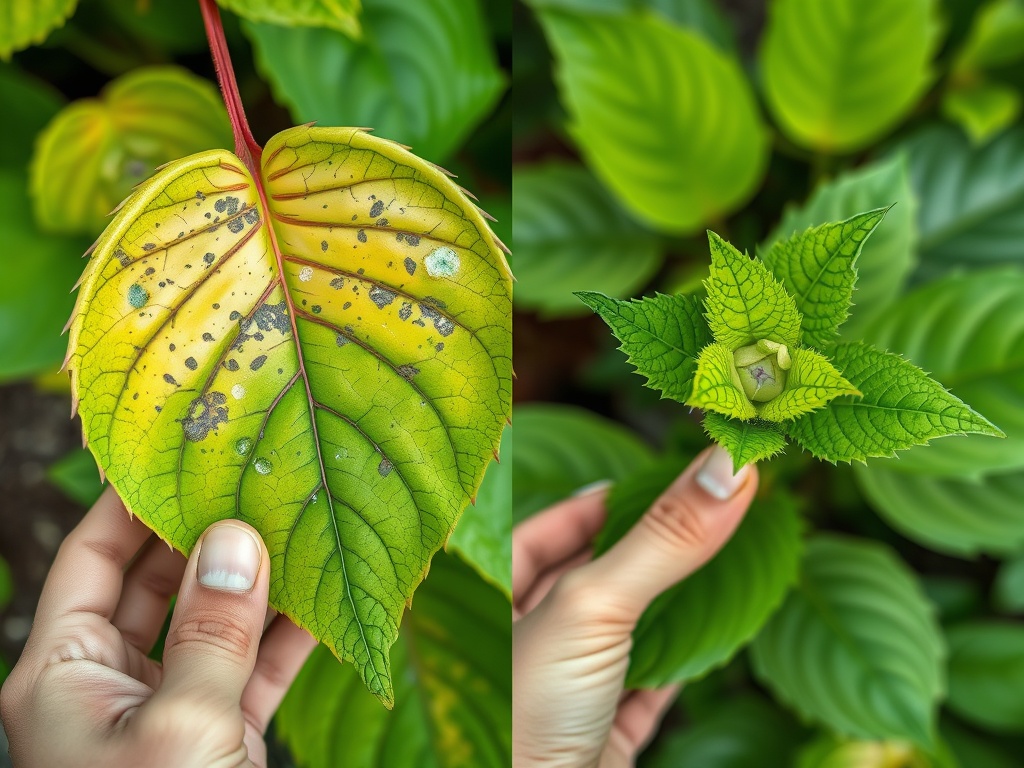
The UC Statewide Integrated Pest Management Program notes that symptoms can also include yellowing, browning, leaf drop, distortion, and reduced plant appearance or vigor. On some fruit crops, infection can also scar fruit. Because symptoms vary by host, identification should consider the plant species as well as the white growth.
Why It Shows Up in Some Gardens More Than Others
Powdery mildew tends to become more noticeable when several favorable conditions overlap. Dense foliage can trap humid air. Closely spaced plants may dry slowly after irrigation and receive less air movement. Shaded growth can stay cooler than leaves in direct sun. Heavy nitrogen feeding can also encourage lush, tender growth that creates a dense canopy.
Plant genetics matter too. Some cultivars are much more susceptible than others, while resistant or less-susceptible varieties may stay cleaner under the same conditions. If mildew appears on the same plant every year, replacing that cultivar may be more effective than repeating a season-long spray routine.
It also helps to separate disease problems from insect problems. Whiteflies, scale, mealybugs, spider-mite webbing, mineral residue, and dust can all create pale or whitish symptoms. A careful look at both leaf surfaces, stems, and new growth should come before treatment. If pests are part of the problem, identify them separately before applying any control product.
A Practical Prevention Routine
Start with placement. Put sun-loving plants where they receive the light they need, and avoid crowding them against fences, walls, or neighboring plants if that blocks airflow. Prune selectively when a plant has become unusually dense, but do not strip healthy foliage simply to create space.
Next, review watering. Water the root zone deeply enough for the plant and soil type rather than splashing small amounts every day. If overhead irrigation is used, time it so foliage can dry promptly and follow crop-specific guidance. The goal is not to create drought stress; it is to avoid a constantly humid, congested canopy.
Fertilize based on plant needs rather than the idea that more feeding always means more growth. Excess nitrogen can produce soft, crowded foliage. Mulch and weed management can also help by reducing competition and keeping plants more stable through weather swings. For gardeners trying to reduce inputs across the yard, eco-friendly lawn alternatives can also free up time and irrigation attention for higher-value plantings.
Finally, inspect susceptible plants early. Look at lower leaves, interior growth, new shoots, and shaded sections. Catching a small patch gives you more options than waiting until most of the canopy is coated.
What to Do When You Find the First White Patches
For a light, localized infection, remove badly affected leaves or shoots if doing so will not defoliate the plant. Use clean pruning tools and dispose of material in a way that fits your local waste and composting practices. Do not shake infected leaves through healthy plants while carrying them away.
Then correct the conditions that are helping the disease. Open crowded growth, move containers to more suitable light if the plant tolerates it, and avoid high-nitrogen feeding. If the plant is in a container that stays damp or crowded, the pot itself may be part of the management problem. The differences among outdoor pot materials can affect drying rate, heat exposure, weight, and how often a container needs attention.
For valuable or highly susceptible plants, treatment may be justified. Horticultural oils, sulfur products, and other fungicides can be options for certain plants, but timing and compatibility matter. Some materials work mainly as protectants, while oils may help suppress established colonies. Never assume that two products can be combined or applied close together. Read the full label for the exact crop or ornamental, temperature limits, application interval, protective equipment, and restrictions around harvest.
Treatment Choices Without Guesswork
Use this sequence before spraying anything:
1. Confirm that the problem is actually powdery mildew.
2. Identify the host plant and whether it is ornamental or edible.
3. Decide whether the infection is minor enough for pruning and cultural correction.
4. Check local extension guidance for products registered for that plant and disease.
5. Read the pesticide label before purchase and again before mixing or applying.
6. Treat early when the selected product works best as a protectant or at first symptoms.
7. Reinspect new growth rather than judging success only by old damaged leaves.
Old infected tissue may not return to a clean appearance even after disease pressure is reduced. Judge progress by whether new leaves remain healthier and whether the disease stops spreading rapidly.
Common Fixes That Often Backfire
A homemade spray found online is not automatically safer for leaves, people, pets, pollinators, or edible crops. Concentrated soaps, oils, baking-soda mixtures, and other kitchen remedies can burn foliage or create residues when used at the wrong rate. If you use a registered pesticide, the label is the legal and practical guide for use.
Another mistake is spraying on very hot, bright days. Some oils and sulfur products can injure foliage under certain temperatures or when applied too close together. Product labels and extension guidance should determine timing.
Do not remove so much foliage that the plant is left unable to photosynthesize effectively. Selective pruning can help; severe stripping can create a different stress problem. Also avoid treating every nearby plant "just in case." Powdery mildew fungi are often host-specific, so prevention should be targeted.
A Better End-of-Season Strategy
If powdery mildew returns each year, keep a simple note of which plants were affected, when symptoms began, how much sun the site received, and what control worked. That record can guide variety selection and spacing next season more effectively than relying on memory.
For perennials and woody plants, remove heavily infected debris when appropriate for that species and local disease guidance. For annual vegetables or flowers, rotate or relocate susceptible crops when practical, especially if other soil or disease issues are also present. Most importantly, choose the right plant for the site's light, airflow, and climate instead of trying to force a highly susceptible plant through unfavorable conditions.
Home and garden information is provided for educational purposes only. Pesticide rules, product registrations, plant sensitivity, and recommended practices vary by location and species; consult local extension guidance or a qualified horticulture professional when the diagnosis or treatment is uncertain.
A useful next step is to inspect the affected plant closely, record the host and site conditions, and start with the least disruptive correction that fits the severity of the problem.