Best Practices for Best Practices for Choosing Trail-Access or Slope-Access Properties
Choose a trail-access or slope-access property by verifying the actual route from lodging to the activity, the seasonal operating conditions, transportation backup, gear logistics, and the elevation you will sleep at. "Ski-in/ski-out" or "near the trail" can be useful descriptions, but they do not replace a map and a current conditions check.
TL;DR Verify the walking or skiing route, check who maintains it and when it operates, confirm gear storage and transport, consider weather and altitude, and keep a backup plan for closures or conditions that change. The best property is the one that fits your ability, equipment, schedule, and tolerance for extra logistics.
Translate Marketing Labels Into an Actual Route
A property can be close to a trail or slope without offering the direct access you imagine. The route may cross a road, require a shuttle, depend on a lift, include stairs, involve an unpaved path, or work only when snow coverage reaches a certain level. Ask for the current route in practical terms: distance, elevation change, surface, opening hours, and any transfer needed.
For ski properties, clarify where guests put on equipment and where they return at the end of the day. A slope may pass close to the building but still require a walk to a lift. For hiking properties, determine whether the nearby trail is the specific route you want or simply one trail in a larger network.
The National Park Service recommends checking weather and park alerts before hiking and carrying a backup plan when conditions are not suitable. Its Hike Smart guidance is a useful model for verifying conditions rather than treating access as static.
Compare Convenience With the Rest of the Stay
Direct access has value only in the context of the whole trip. A remote lodge at a trailhead may be ideal for early starts but inconvenient for groceries, restaurants, medical care, equipment repair, or evening activities. A central village hotel may add a shuttle ride to the slope but make everything else easier.
Map the places you will use beyond the trail: parking, rental shop, ski school, lift ticket office, restaurants, transit stops, grocery options, spa, pool, and any meeting or family facilities. Then estimate which trips you will make repeatedly. Convenience is cumulative.
If the choice involves a resort program as well as outdoor access, compare the activity schedule with the property features. A traveler who wants guided exercise or recovery sessions may also want the framework for choosing resort fitness programs before paying more for a wellness-focused property.
Plan for Elevation, Weather, and Seasonal Variability
Mountain access changes with weather, snowpack, maintenance, wildfire, flooding, lift operations, and trail closures. Avoid treating a property's access description as a guarantee that a particular trail or slope will be usable on your dates. Check official conditions close to travel and again before heading out.
Sleeping altitude also matters for some destinations. The CDC's 2026 Yellow Book explains that risk of altitude illness is influenced by sleeping altitude and rate of ascent, and it recommends gradual acclimatization for higher elevations. Review the CDC's high-altitude travel guidance if your trip involves a rapid ascent or a high sleeping elevation, and seek medical advice when your health history makes that appropriate.
This is not an argument against high-altitude lodging. It is a reason to include elevation in the decision instead of evaluating the property only by trail distance.
Check Gear Handling Before You Arrive
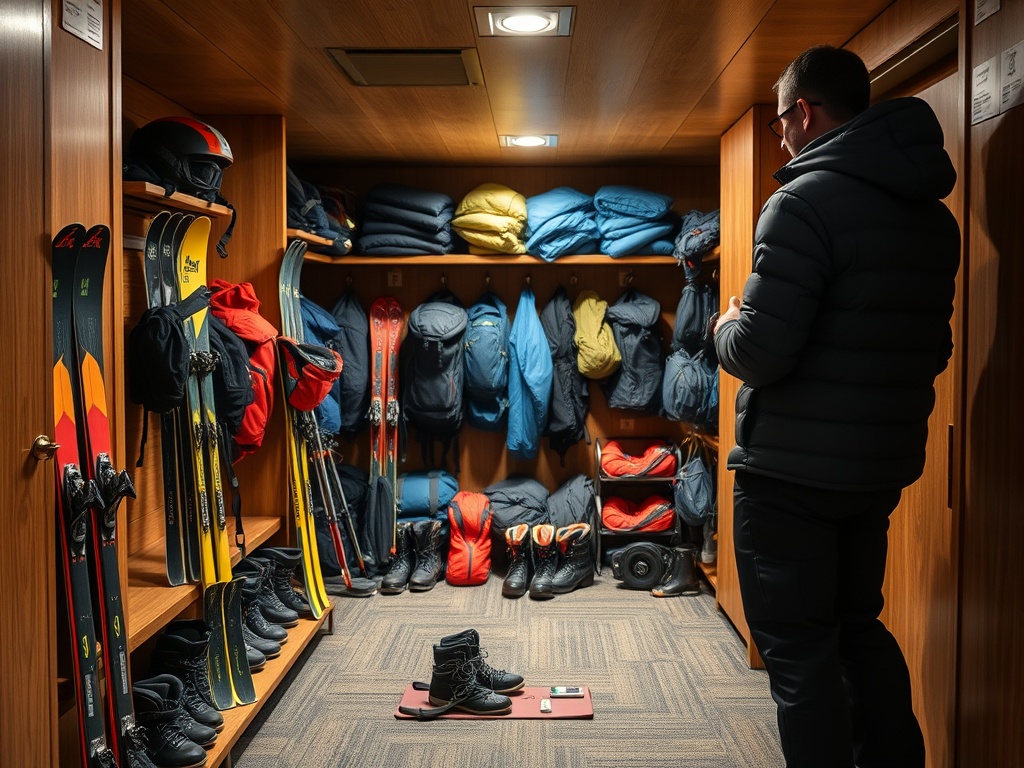
Outdoor trips create equipment questions that ordinary hotel searches may overlook. Ask whether the property has secure ski, snowboard, bike, or hiking-gear storage; whether wet gear can dry somewhere appropriate; whether boots are allowed in guest areas; and whether rentals can be collected or returned on site.
If you are flying with equipment, map the transfer from airport or station to the hotel. If the property uses a shuttle, confirm luggage and gear capacity. If you rent locally, check shop hours and the route between the shop and the lodging. A five-minute map distance can feel much longer while carrying skis, boots, or a bike case.
Families and groups should also ask how room location affects equipment movement. A long corridor, stair-only building, or distant annex may change the value of direct outdoor access. Similar location trade-offs appear in coastal resorts; the process in choosing beachfront room locations can be adapted to mountain buildings by replacing beach paths with trail, lift, and gear routes.
Separate Essential Access From Nice-to-Have Access
Write down what must be true for the property to work. Examples might include a step-free route to the shuttle, secure bike storage, a lift within a short walk, a beginner slope nearby, or a trailhead that avoids driving. Then list preferences such as a mountain view or the shortest possible route.
Do verify the route on a current map. Do ask about seasonal limitations. Do check official weather and closure information. Do confirm gear handling. Do keep an alternative activity or transportation plan.
Do not assume "slope-side" means ski-in/ski-out. Do not choose a high-elevation property without considering how quickly you will arrive there. Do not treat old guest photos as proof of current access conditions. And if environmental practices influence your selection, use the evidence checks in verifying hotel sustainability claims rather than relying on a generic "eco lodge" label.
Build a transportation backup into the property comparison as well. A shuttle may be convenient until weather, traffic, or operating hours make it unavailable. Check whether taxis, rideshare, public transit, private transfers, or safe walking routes exist, and whether late arrivals need special instructions. For remote lodges, ask how guests reach medical care, equipment repair, or an alternate activity when the primary trail or lift is closed. These questions do not make a remote property less attractive; they show whether the convenience of direct access is supported by enough redundancy for your itinerary, arrival plan, and the possibility of a late schedule change, closure, or transport disruption after arrival.
Match the Property to the Adventure
The strongest trail- or slope-access choice is based on a verified route, realistic gear movement, current operating conditions, and a property location that supports the rest of the trip. Before booking, trace one complete activity day from your room to the trail or lift and back again; any missing step in that route is a question worth asking the property.