Oral Biopsy Basics: When a Mouth Lesion Needs Testing
Oral Biopsy Basics: When a Mouth Lesion Needs Testing
An oral biopsy is a small tissue sample taken from an area in the mouth that looks unusual or is not healing as expected. It does not automatically mean cancer, but it is one of the most reliable ways to find out what a persistent lesion actually is.
Key takeaway: A biopsy may be recommended when a mouth sore, red patch, white patch, lump, or mixed-color lesion does not resolve, keeps returning, or has features that concern a dentist. Many biopsies are routine, but they become more urgent when a lesion lasts more than two weeks, changes quickly, bleeds easily, or looks suspicious on exam.
What “oral biopsy” means in plain language
A biopsy is a test, not a diagnosis. The dentist or specialist removes all or part of the area so a pathologist can examine the tissue under a microscope. The National Institute of Dental and Craniofacial Research oral cancer information page emphasizes that early evaluation matters because oral cancer and precancerous conditions can be easier to detect during routine exams. NIDCR’s professional guidance also notes that any white or red lesion that does not resolve in about two weeks should be reevaluated and considered for biopsy.
Which mouth lesions usually raise concern
Not every mouth sore needs testing. Many irritations come from cheek biting, a sharp tooth edge, dentures, burns, or recent trauma and improve once the cause is removed. A biopsy enters the conversation when the area does not behave like a short-lived irritation.
Features that often prompt testing include:
- a sore that has not healed after two weeks
- a red, white, or mixed red-and-white patch
- a lump or thickened area
- an ulcer with raised or firm borders
- unexplained bleeding, numbness, or persistent pain
- a lesion that keeps returning in the same place
Planning Notes for Oral Biopsy Basics
Many oral biopsies are straightforward office procedures done with local anesthetic. The area is numbed, a sample is taken, and the tissue is sent to a lab. Small lesions may be removed completely. Larger or more suspicious areas may need only a representative sample first. The goal is to get a diagnosis before deciding on broader treatment.
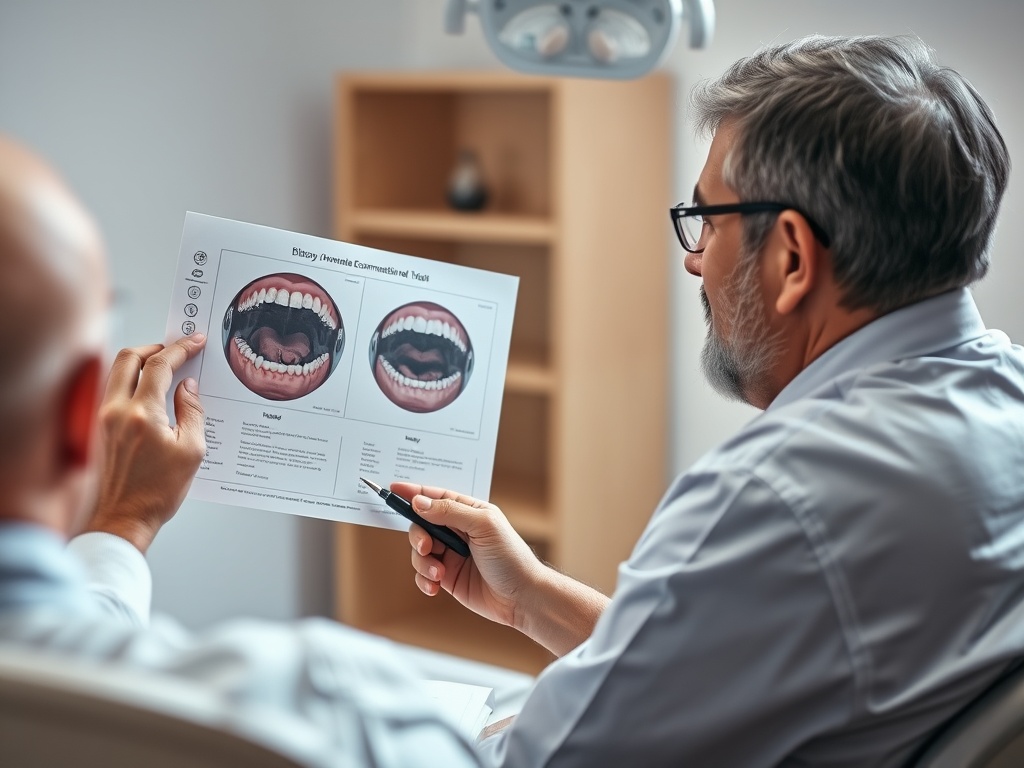
Editorial clinical scene of an oral medicine or dental specialist examining a mouth lesion with focused overhead light.
A routine case usually means:
- the area is small and easy to access
- the patient is otherwise medically stable
- bleeding risk is manageable
- the lesion is being sampled for diagnosis, not emergency control
What changes the referral path
A lesion may need referral to an oral surgeon, oral medicine specialist, ENT, or another specialist when it sits in a difficult location, involves deeper tissue, looks highly suspicious, or affects speech, swallowing, or jaw movement. A recent review on biopsy for suspicious oral lesions in PubMed describes biopsy as a central tool for evaluating potentially malignant oral lesions and emphasizes the need for standardized, timely assessment.
A dentist may change the plan if:
- the lesion is large or fast-changing
- there are enlarged lymph nodes or unexplained weight loss
- the patient has significant medical risk factors
- the pathology result shows dysplasia, cancer, or another condition needing specialist treatment
What to expect afterward
Most patients notice mild soreness, some limited bleeding, and temporary sensitivity depending on the site. You may need soft foods for a day or two, and the office may place stitches. The exact recovery depends on the location and size of the sample.
Typical aftercare includes:
- avoiding trauma to the area
- following instructions for rinsing and oral hygiene
- eating softer foods if chewing is uncomfortable
- calling if bleeding persists, swelling grows, or pain worsens unexpectedly
If you are unsure whether your symptoms fit normal healing, the decision framework in Post-Op Pain vs Post-Op Complication: How to Tell the Difference can help you decide when to report a change sooner.
Planning Notes for Oral Biopsy Basics During Planning
A routine appointment is appropriate for a sore that is improving or clearly linked to a recent injury. Book promptly when an unexplained lesion lasts beyond two weeks, returns repeatedly, or looks more noticeable over time. Seek urgent care sooner if there is rapid swelling, difficulty swallowing, heavy bleeding, or airway concerns.
Why waiting can change the treatment plan
People often delay because the lesion does not hurt. Pain is not a reliable screening tool. Some serious lesions are painless early on, while some harmless lesions can be very tender. That is why appearance, duration, and persistence matter so much.
If cost is part of the hesitation, practical planning may help you move forward sooner. Our article on No Dental Insurance? Realistic Ways to Pay for Care covers ways people often compare payment options before putting off needed evaluation.
Questions About Oral Biopsy Basics
Before leaving the discussion of Oral Biopsy Basics: When a Mouth Lesion Needs Testing, confirm the first step, expected follow-up, and warning signs that justify earlier contact during the initial review. A consultation about Oral Biopsy Basics: When a Mouth Lesion Needs Testing is more useful when you bring a brief timeline, current medicines, relevant health conditions, and details of earlier dental work.
Clinical Checks for Oral Biopsy Basics
For Oral Biopsy Basics, this part of Clinical Checks for Oral Biopsy Basics focuses on confirmed findings, measurements, imaging, and health-history factors while the expected outcome is clarified, with the same details verified while recovery expectations are clarified. The clinician should also explain what remains uncertain and whether another test or specialist opinion would alter the plan for Oral Biopsy Basics before consent is finalized, using the examination and health history rather than a general assumption.
Comparing Options for Oral Biopsy Basics
For Oral Biopsy Basics, this part of Comparing Options for Oral Biopsy Basics focuses on benefit, limitations, durability, maintenance, timing, and total cost before the final recommendation is accepted, with the same details verified while recovery expectations are clarified. The clinician should also explain how each choice preserves tooth structure or tissue and what backup treatment may be needed for Oral Biopsy Basics when home-care instructions are prepared, using the examination and health history rather than a general assumption.
A useful rule of thumb
A mouth sore caused by a clear irritant should start settling once the irritant is gone. A lesion that stays, returns, thickens, changes color, or keeps bleeding deserves a professional look.
If you have a patch or sore in the mouth that has not healed after about two weeks, schedule a dental or oral medicine evaluation instead of waiting for it to declare itself more clearly.
Clinical Checks for Oral Biopsy Basics During Planning
For Oral Biopsy Basics, this part of Clinical Checks for Oral Biopsy Basics During Planning focuses on confirmed findings, measurements, imaging, and health-history factors during the initial review, with the same details verified when the diagnosis is confirmed. The clinician should also explain what remains uncertain and whether another test or specialist opinion would alter the plan for Oral Biopsy Basics while cost and timing are compared, using the examination and health history rather than a general assumption.