Why Clear Aligners Need Attachments, Buttons, and Compliance
Why Clear Aligners Need Attachments, Buttons, and Compliance
Clear aligners work by applying carefully planned force to teeth, but the plastic trays cannot do every movement efficiently on their own. That is why dentists and orthodontists often add attachments, buttons, elastics, and strict wear-time instructions to make the treatment more precise and predictable.
Key takeaway: Attachments are small tooth-colored bumps that help aligners grip teeth. Buttons and elastics add extra force for selected bite corrections. “Compliance” means wearing the trays and any elastics exactly as directed, because even well-designed aligners can stall when they are not worn enough.
What patients are actually seeing on a treatment plan
The words can sound more complicated than they are. Attachments are bonded shapes placed on certain teeth so the aligner has something to push against. Buttons are small anchors, sometimes used with elastics, when the bite needs additional directional force. Compliance is the daily follow-through that lets the plan work.
A recent review of clear aligner attachments in PubMed Central describes attachments as part of the biomechanics that improve control for rotations, extrusion, root movement, and other tooth movements aligners alone may not handle as predictably. Separate educational guidance on buttons and elastics for clear aligners explains that buttons and elastics are used for additional anchorage control and bite correction.
Why aligners need help in the first place
Patients often assume clear aligners are just “plastic retainers that move teeth.” In reality, some movements are easy and others are stubborn. Tilting a tooth is different from rotating it. Closing a simple space is different from correcting a bite relationship. The auxiliaries are there because biology and mechanics are not the same from tooth to tooth.
Attachments can help when a dentist wants:
- better grip on a tooth
- more controlled rotation
- improved vertical movement
- stronger retention of the tray
- more predictable staging between aligner sets
What buttons and elastics add
Buttons are usually discussed when bite correction matters, not only straightness. Elastics can pull the upper and lower teeth into a better relationship over time. That makes them easy to ignore at first and frustrating to underestimate later. If the patient skips them, the aligners may still fit, but the bite objective may lag behind the tooth alignment.
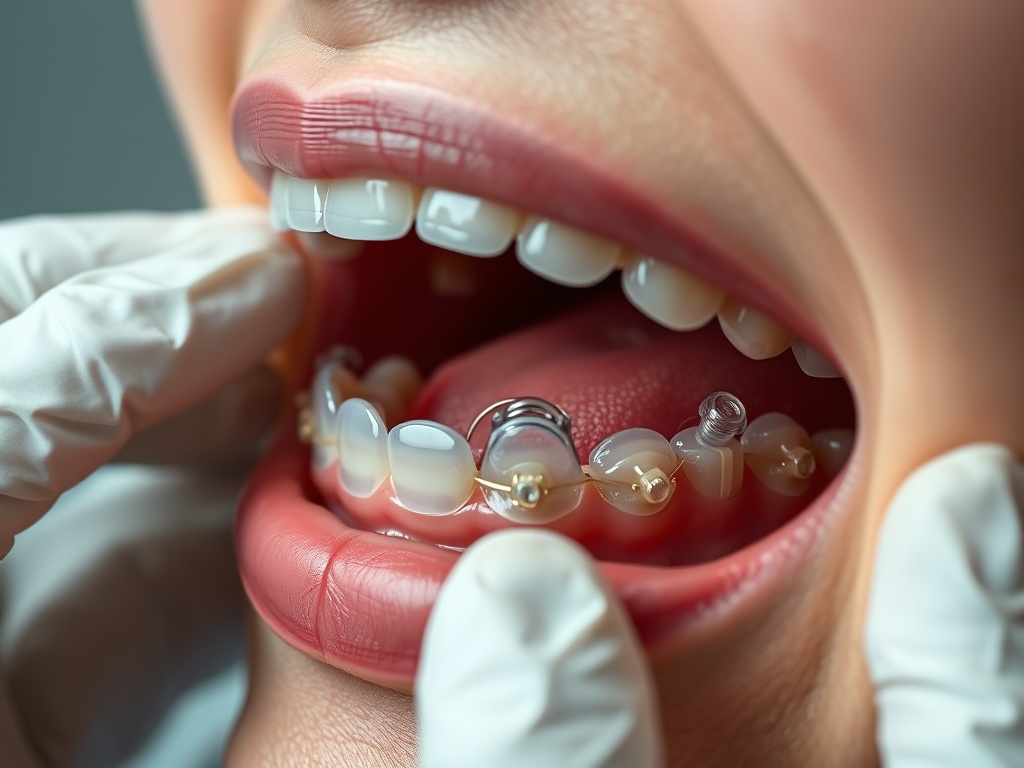
Editorial orthodontic close-up showing a clear aligner beside a tooth model with small attachments visible.
Why compliance affects treatment length
This is the part patients most often confuse. Attachments do not “replace” wear time. They only make the programmed forces possible. If a tray is worn for too few hours, changed too early, or not seated fully, the tooth may not reach the expected position before the next stage. That can lead to poor fit, extra refinement trays, or slower progress.
Common compliance problems include:
- removing trays too often for snacks or drinks
- not using chewies or seating tools when instructed
- skipping elastics because they are inconvenient
- changing trays on schedule even though the current one is not tracking
- assuming “almost full-time” is close enough
This mechanical side of treatment is also why prevention habits matter. Our guide on How to Brush Properly Without Damaging Your Gums is worth pairing with aligner wear, because plaque and gum irritation make any orthodontic journey harder to manage.
What patients often confuse with attachments
Patients may mix up attachments with buttons, bite ramps, or simple manufacturing ridges in the aligner. The easiest way to think about it is this: attachments are usually bonded shapes on teeth, while buttons are anchoring points, often used with elastics. Both are tools, not signs that your case is “going wrong.”
A dentist may recommend them because:
- your case includes rotations or deeper root control
- your bite needs upper-to-lower coordination
- certain teeth are not moving as planned
- the trays need more retention to stay fully engaged
Planning Notes for Clear Aligners Attachments Buttons Compliance
For many patients, attachments and wear instructions stay completely routine. You adapt, cleaning gets easier, and the aligners become part of the day. The plan changes when teeth stop tracking, an attachment repeatedly falls off, elastics are not realistic for the patient, or the bite is not responding the way the initial setup predicted.
If cost questions are part of the hesitation, it may also help to read No Dental Insurance? Realistic Ways to Pay for Care before deciding whether to pause, switch systems, or continue with refinements.
Questions About Clear Aligners Attachments Buttons Compliance
For Clear Aligners Attachments Buttons Compliance, this part of Questions About Clear Aligners Attachments Buttons Compliance focuses on the symptom history, previous treatment, current medicines, and the result the patient values most as the long-term result is reviewed, with the same details verified while recovery expectations are clarified. The clinician should also explain which examination finding supports each recommendation and what information could change it for Clear Aligners Attachments Buttons Compliance before temporary care is replaced, using the examination and health history rather than a general assumption.
Clinical Checks for Clear Aligners Attachments Buttons Compliance
When evaluating Why Clear Aligners Need Attachments, Buttons, and Compliance, the dentist should explain how medical history, previous treatment, bite forces, and tissue health affect the recommendation. Before accepting a plan for Why Clear Aligners Need Attachments, Buttons, and Compliance, request a plain-language explanation of what would make the diagnosis or treatment sequence change before consent is finalized.
Comparing Options for Clear Aligners Attachments Buttons Compliance
Before choosing a path for Why Clear Aligners Need Attachments, Buttons, and Compliance, identify which trade-off matters least and which clinical risk matters most when the diagnosis is confirmed. When comparing approaches to Why Clear Aligners Need Attachments, Buttons, and Compliance, use the same criteria for every option: expected benefit, limitations, durability, maintenance, timing, and total cost.
What to ask before starting or continuing
Ask what each attachment or elastic is meant to do, how many hours the trays need to be worn, what poor tracking looks like, and what would trigger a refinement scan. Those questions usually matter more than asking whether the bumps are “normal.”
The goal is not perfectly invisible treatment. It is controlled, predictable tooth movement. If you have been told you need attachments, buttons, or elastics, that usually means your dentist is trying to make the aligners work better, not make treatment more complicated for no reason.
Clinical Checks for Clear Aligners Attachments Buttons Compliance During Planning
For Clear Aligners Attachments Buttons Compliance, this part of Clinical Checks for Clear Aligners Attachments Buttons Compliance During Planning focuses on confirmed findings, measurements, imaging, and health-history factors before the next appointment is booked, with the same details verified while recovery expectations are clarified. The clinician should also explain what remains uncertain and whether another test or specialist opinion would alter the plan for Clear Aligners Attachments Buttons Compliance while the options are being narrowed, using the examination and health history rather than a general assumption. Recording that explanation gives the patient a clearer next step for Clear Aligners Attachments Buttons Compliance before the next appointment is booked, especially when follow-up duties are reviewed while recovery expectations are clarified.