How to Decorate With Plants Without Adding Clutter
Plants make a room feel more finished when they are treated as part of the composition rather than scattered into every empty spot. The simplest approach is to choose fewer plants with clear visual roles, match them to the available light, repeat container finishes, and preserve open surfaces around them.
The Uncluttered Plant Formula
- Use one focal plant before adding several small ones.
- Match the plant to the room's actual light rather than the ideal location in a photo.
- Repeat two or three pot finishes instead of collecting unrelated containers.
- Use vertical space to protect floors, counters, and tables from crowding.
- Keep pet and child safety part of plant selection.
Step 1: Read the Room Before Buying Plants
Look at the room's largest forms first: sofa, dining table, bed, media unit, bookcase, and windows. A plant should either balance one of those forms, soften a hard edge, or add height where the composition needs it. If it does none of those things, it may simply add another object to manage.
Light is the non-negotiable part. The University of Minnesota Extension guide to indoor plant lighting recommends selecting plants whose requirements match the existing indoor light. That is more reliable than buying a plant for a dark corner because a design photo showed one there.
Observe direct sun, bright indirect light, and darker zones at different times of day. Windows change with season, trees, awnings, and neighboring buildings, so a room that feels "bright" to a person may still be low-light for a plant.
Step 2: Choose a Focal Plant First
A single floor plant can do more visual work than five small pots. Use a taller specimen near a window, at the end of a console, or beside a substantial piece of furniture where it can balance scale without blocking circulation.
The plant does not need to be enormous. A slim upright form can add height in a narrow room, while a broader plant can soften an empty corner. Leave visible floor or wall around it so the silhouette reads clearly.
Once the focal plant is placed, stop and reassess. Many rooms need less greenery than expected.
Step 3: Group Small Plants Instead of Scattering Them
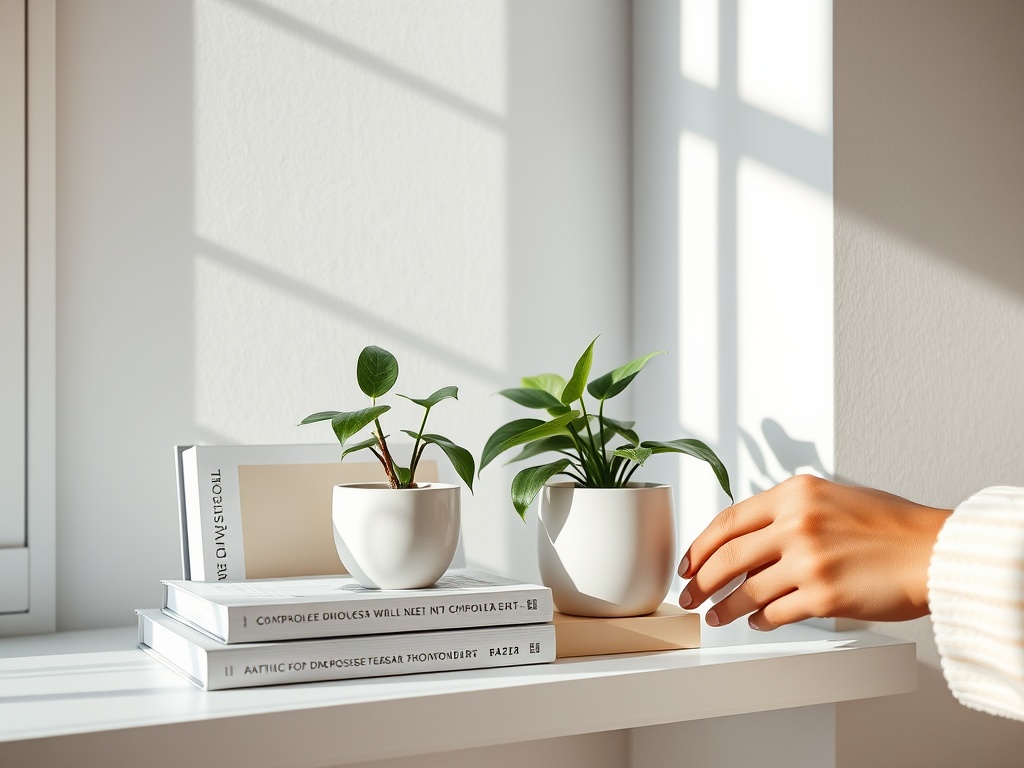
Three small pots spread across three surfaces create three cleaning obstacles and three visual interruptions. Grouping compatible plants on one tray, shelf, or windowsill can make the same collection look intentional.
Compatibility matters. Plants grouped tightly should have similar light and watering needs. Do not place a moisture-loving plant in a dry succulent arrangement simply because the leaf colors coordinate.
Use odd-number groupings only when they genuinely improve the composition. "Three of everything" is a design convention, not a rule. One plant on a desk and two on a window ledge may be cleaner than a forced trio.
Step 4: Create a Small Container Palette
Pots are part of the room's material language. Choose a limited family such as matte white ceramic, warm terracotta, or dark neutral planters and repeat it. The containers do not need to match exactly; a shared color, texture, or shape is enough.
Use cachepots to conceal nursery pots when practical, but maintain drainage. Never let a plant sit in accumulated water because the decorative outer pot has no drainage hole.
For plants that spend part of the year outside, account for container weight, porosity, heat, and weathering before a pot becomes part of the indoor-outdoor routine.
Step 5: Use Height Before Using More Surface Area
A narrow plant stand, wall shelf, ceiling hook, or tall bookcase can move greenery upward and leave furniture functional. This is especially useful in small rooms where every horizontal surface already has a job.
Wall-mounted or hanging plants still need safe anchors and appropriate light. Follow hardware load ratings and wall-construction requirements. Keep trailing plants away from doors, fans, heat sources, and places where children or pets can pull them down.
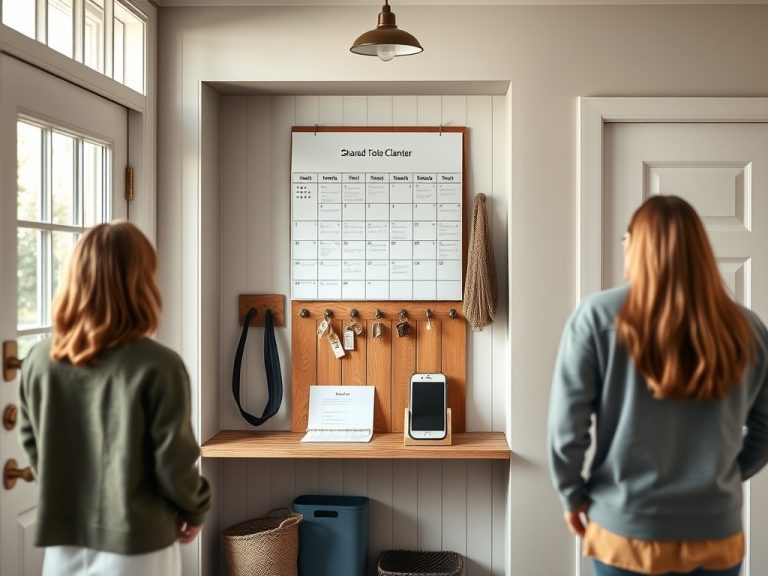
A well-organized home may already have a family command center near an entry. Resist using that high-traffic system as another plant shelf if foliage blocks schedules, keys, charging, or paper flow.
Step 6: Edit the Background Around the Plant
A plant will not visually calm a shelf that already holds framed photos, candles, baskets, books, souvenirs, and small decor. Remove or relocate competing objects so the plant has space around it.
Try the subtraction test: take away two small objects before adding one plant. If the shelf looks better, keep the edit. Plants are living decor, but they still add shape, color, shadow, and maintenance to a room.
Use repetition to connect rooms. A similar pot finish in the living room and kitchen can create continuity without adding more plants.
Step 7: Plan for Watering and Mess
The cleaner the watering routine, the less plants feel like clutter. Use saucers or waterproof trays where needed, protect wood furniture, and keep a small watering can in a cabinet rather than displayed on every surface.
Rotate plants only when needed for balanced growth and light exposure. Wipe dust from broad leaves as appropriate for the species. Remove dead foliage promptly. An unhealthy plant with yellow leaves, pests, or a damaged pot creates more visual noise than an empty corner.
If a plant develops a fungal problem, diagnose it before moving it around the room. The guide to powdery mildew causes and treatment explains why white fungal growth should be managed with plant-specific cultural care rather than treated as a decorating issue.
Step 8: Check Pet and Child Safety
Plant toxicity varies by species. Before placing a houseplant where a pet can chew it, verify the exact botanical or common name with a reliable source. The ASPCA Toxic and Non-Toxic Plants database provides plant-specific information for dogs, cats, and horses.
Do not rely on a plant being labeled "pet friendly" without checking the species. Also consider physical hazards: heavy floor pots can tip, cactus spines can injure, and trailing vines can become pull hazards for toddlers.
When the Room Still Feels Busy
If the room remains cluttered after plants are grouped, remove one category of decor rather than buying matching storage immediately. Too many baskets can become clutter too.
If plants are concentrated around one window and the rest of the room feels empty, use non-plant elements such as art, a floor lamp, or negative space to balance the composition. A room does not need greenery in every corner to feel cohesive.
If plant stands crowd circulation, move the plants to wall or window positions that preserve a clear path. Furniture layout should win over decorative density.
Let Empty Space Do Part of the Decorating
A plant looks more deliberate when it has room to be seen. Use greenery to punctuate a room, not fill every gap. The result is easier to clean, easier to water, and more visually restful.
Home and garden information is educational only. Plant light, watering, toxicity, mounting safety, and child or pet risks vary by species and household; verify plant identity and use qualified guidance for uncertain safety or installation conditions.
A practical next step is to choose one room, remove two small decorative objects, identify its best plant-light zone, and add only one plant that serves a clear visual purpose.