How to Maximize Corner Cabinets and Dead Space
Corner cabinets and awkward gaps become useful when storage is matched to the way the kitchen is used. Instead of forcing every inch to hold something, prioritize access: choose rotating shelves, pull-outs, drawers, open shelving, or intentionally empty clearance based on what can be reached safely without blocking doors, appliances, or work zones.
The Dead-Space Decision Rule
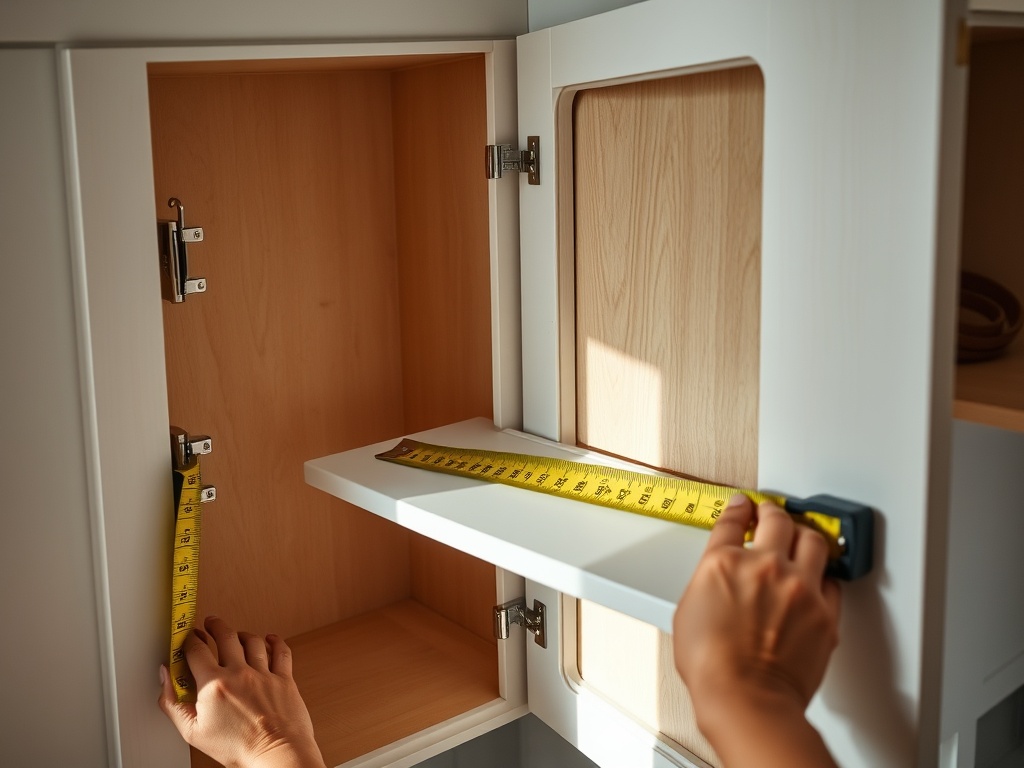
- Measure the opening, interior cavity, door swing, and nearby appliance handles before choosing hardware.
- Store frequently used items where they can be reached without unloading other items first.
- Use deep corners for bulky, less-frequent items only when access hardware makes sense.
- Do not sacrifice safe clearances or ventilation just to gain a few cubic inches.
- Treat plumbing, electrical, structural, and cabinet modifications as separate constraints.
Step 1: Identify What Kind of Corner You Have
A base cabinet can form an L-shaped corner, a blind corner where one cabinet extends behind another, or a diagonal corner with an angled door. Wall cabinets can create similar conditions above the counter. Each geometry supports different hardware.
Open every adjacent door and appliance at the same time. Refrigerator handles, dishwasher doors, oven doors, and pull-out trash bins can conflict with corner hardware even when the cabinet itself looks large on paper.
The National Kitchen & Bath Association planning guidelines cover functional storage, cabinetry, activity centers, clear floor space, and systems coordination. For a major remodel, those whole-room relationships matter more than squeezing an accessory into one cabinet.
Step 2: Decide What the Corner Should Store
Start with contents, not hardware catalogs. Large mixing bowls, small appliances, food containers, baking supplies, and cookware all behave differently in a deep cabinet.
Make three groups: daily-use, weekly-use, and occasional-use. Daily items deserve one-motion access. Occasional appliances can tolerate a deeper location if they can still be lifted safely. Avoid storing very heavy objects where they require twisting and reaching deep into a blind corner.
If the kitchen already has ample cabinet volume, the smartest answer may be leaving part of the deep corner unused and improving organization elsewhere.
Step 3: Compare the Main Corner-Cabinet Options
Rotating Shelves
Lazy Susan or kidney-shaped rotating shelves bring stored items toward the opening. They work well for jars, small appliances, bowls, and other items that stay stable while turning.
The main advantage is visibility. The trade-off is that the circular shelf does not use every part of a rectangular cabinet cavity. That "lost" space can be acceptable if access improves.
Swing-Out or Pull-Out Systems
Articulated shelves can move from a blind corner into the doorway. These systems can make more of the cavity reachable, but they need precise installation and enough clearance for the mechanism.
Check load ratings, hinge compatibility, and door dimensions. A heavy pull-out full of cookware can place substantial stress on hardware.
Corner Drawers
Corner drawers create a clean front and can provide direct access to utensils, linens, or cookware. They are usually part of a cabinet design rather than a simple retrofit because the drawer boxes and slides are specialized.
They trade some raw cabinet volume for better visibility and ergonomics. That can be a good exchange in a frequently used kitchen.
Fixed Shelves With Bins
The lowest-cost solution may be simple shelves plus handled bins that slide forward. This works best when the opening is wide enough and the contents are light.
Avoid stacking loose items in the back. If a bin has to be emptied to reach what is behind it, the cabinet will quickly become frustrating.
Corner Hardware Comparison
| Option | Access | Retrofit difficulty | Best for | Main limitation |
|---|---|---|---|---|
| Rotating shelves | Good | Moderate | Bowls, jars, small appliances | Does not use every corner inch |
| Swing-out pull-outs | Very good | Moderate to high | Cookware, pantry items | Needs precise clearance and hardware |
| Corner drawers | Very good | High | Daily-use kitchen items | Usually cabinet-specific |
| Fixed shelves + bins | Fair | Low | Light, grouped items | Back area can remain awkward |
| Open corner shelving | Excellent visual access | Moderate | Display or everyday items | Requires tidy contents |
Step 4: Use Vertical Gaps Intentionally
Dead space is not limited to corners. The area above a refrigerator, beside a tall pantry, over upper cabinets, and at the ends of cabinet runs can hold useful storage if the design stays accessible and safe.
A cabinet above the refrigerator is often deep and hard to reach, so reserve it for light, infrequently used items rather than heavy appliances. A narrow side gap may accept a purpose-built pull-out for trays or cleaning tools, but only if it does not interfere with appliance ventilation or manufacturer-required clearance.
Use the same logic in a home organization zone. A compact family command center can use a shallow wall pocket or cabinet end panel without turning the kitchen worktop into a paper-storage area.
Step 5: Reclaim Cabinet Interiors Before Adding New Cabinets
Shelf risers, vertical dividers, drawer inserts, and bins can improve existing storage without changing the cabinet shell. Vertical dividers are especially useful for sheet pans, cutting boards, and trays because each item can be removed without lifting a stack.
Pull-out shelves can make a deep standard cabinet easier to use, but measure hinge intrusion and door opening. Full-extension hardware needs enough room to clear the face frame and adjacent handles.
For a kitchen that also carries decorative plants, use the principles in decorating with plants without clutter so open shelving does not become a mix of cookware, trailing vines, mail, and decor competing for the same space.
Step 6: Protect Work Zones and Safety
Do not install a storage feature that forces a user to stand in front of a hot oven, blocks an emergency exit path, or prevents an appliance door from opening fully. Electrical panels, plumbing shutoffs, air vents, and appliance service access must remain available.
Cabinet modifications can expose wiring, pipes, or structural components. If cutting into walls, floors, or cabinet backs goes beyond a simple accessory installation, identify what is behind the surface first and use qualified trades where required.
Common Corner-Cabinet Mistakes
Buying hardware before measuring is the biggest avoidable error. Product dimensions describe the accessory, but the real fit depends on cabinet opening, face frame, hinge, door, shelf thickness, and adjacent components.
Another mistake is treating capacity as the only goal. A system that holds more but requires kneeling, twisting, and unloading is not necessarily an improvement. Accessibility and frequency of use should decide placement.
Finally, avoid filling every open inch. A small amount of unused cavity can be a reasonable trade for a cleaner layout, easier access, or appliance clearance.
Make the Corner Earn Its Place
The best corner solution is the one that makes stored items easier to see, reach, and return. Start with what you need to store, then choose the simplest mechanism that supports that behavior.
Home improvement guidance is educational only. Cabinet dimensions, appliance clearances, structural conditions, electrical and plumbing systems, and accessibility needs vary; follow manufacturer instructions, local code, and qualified design or trade guidance for remodels and built-in modifications.
A practical next step is to empty one awkward cabinet, photograph the open cavity, measure the door opening and interior depth, then decide which items actually deserve that space before purchasing an organizer.