Best Practices for Best Practices for Requesting Allergy-Friendly Rooms
Request an allergy-friendly hotel room by describing the specific triggers and practical room conditions you need, then asking the property what it can reliably accommodate. Avoid treating labels such as "hypoallergenic" or "allergy-free" as guarantees, because room practices and guest exposures vary by hotel.
TL;DR Contact the property directly, name the relevant triggers, distinguish essential needs from preferences, ask about smoking history, pet exposure, bedding, cleaning products, moisture concerns, and air filtration, then confirm the request in writing. Bring personal medications and protective items according to your own care plan rather than depending on the room to eliminate all risk.
Describe the Trigger Instead of Asking for a Vague Label
"Allergy-friendly room" can mean different things at different properties. One hotel may use fragrance-reduced cleaning products, another may offer feather-free bedding, and another may simply designate nonsmoking rooms. A precise request gives staff something they can act on.
Examples include a feather-free bedding setup, a room that has not been designated for pets, avoidance of heavily fragranced products when feasible, extra attention to visible dust, or a room away from a renovation area. Ask what the hotel can confirm rather than asking staff to promise that no allergen is present.
The U.S. Environmental Protection Agency notes that indoor biological contaminants can include mold, dust mites, pollen, and pet allergens. Its overview of biological contaminants and indoor air quality provides useful background on why specific environmental questions are more meaningful than a broad marketing label.
Contact the Property Before Arrival and Keep the Answer
For an important request, call or message the property after booking and again near arrival according to the hotel's process. Ask that the request be attached to the reservation. If the response identifies a particular room category, cleaning procedure, or limitation, save it with the confirmation.
A concise request is easier to act on than a long narrative. State the trigger, the room feature requested, and whether the need is essential or a preference. For example: "Please note a feather-free bedding request and confirm whether synthetic pillows and duvet can be prepared." If you have several requirements, list them in order of importance.
If your needs relate to a disability and require an accommodation rather than an ordinary preference, ask the hotel how it handles accessibility requests and what it can guarantee. Do not assume the reservation system's free-text notes are enough for a critical accommodation.
This same confirmation habit can be useful when choosing trail-access or slope-access properties, where room location, outdoor exposures, and building layout may also affect the practical fit of a stay.
Ask About the Room Conditions That Matter to You
For respiratory or environmental sensitivities, useful questions may include whether the room is nonsmoking, whether smoking is permitted on adjoining balconies, whether pets commonly stay in that room type, what bedding fill is used, and whether the property can change it. You can also ask whether there has been recent water damage or an active moisture problem if you have a specific concern.
The American College of Allergy, Asthma and Immunology advises travelers with allergies and asthma to plan ahead and, among other measures, request a nonsmoking hotel room. Its patient resource on allergies and asthma on vacation can help travelers build a broader preparation list with their clinician when needed.
Air cleaners can be helpful in some contexts, but do not assume that a device labeled HEPA makes a room "allergen free." Ask what equipment is actually present, whether it is portable or part of the HVAC system, and whether the hotel can confirm maintenance. For a severe allergy or asthma condition, your personal medical plan should come from a qualified clinician.
Bring the Items You Control
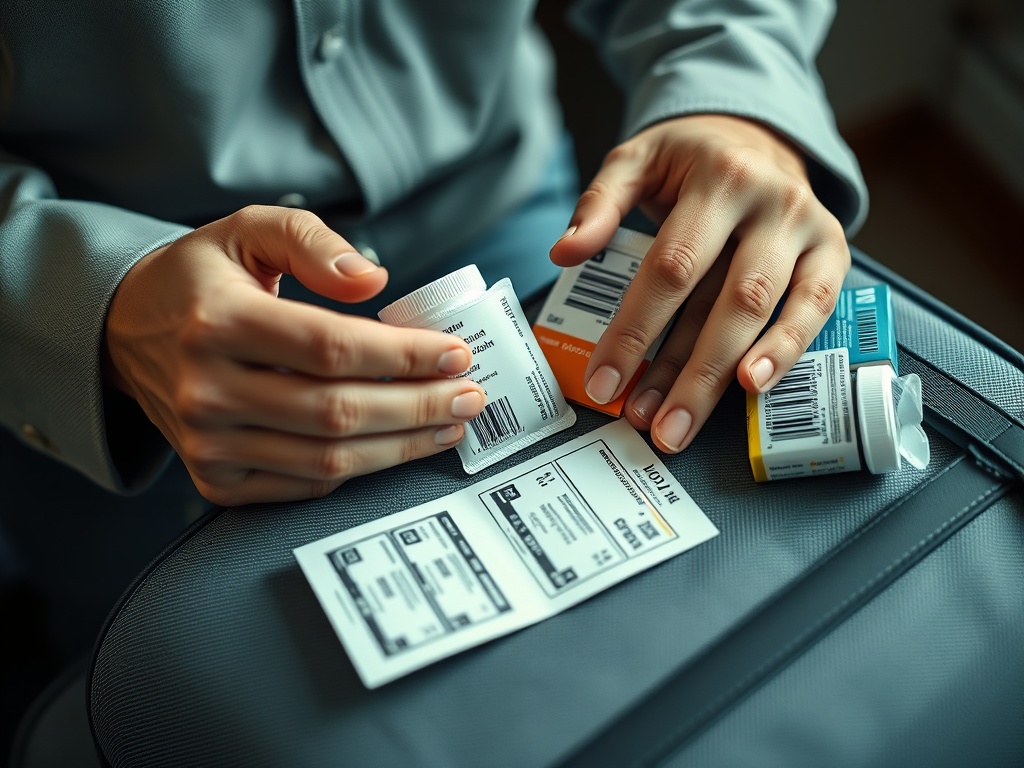
A hotel can prepare a room, but you control some of the most reliable parts of the plan. Bring prescribed medications, emergency medication if applicable, and any pillow encasement, mask, or personal product that your clinician recommends and that helps you manage known triggers.
If food allergy is part of the trip, treat dining as a separate risk-management task. A room request does not establish kitchen practices. Contact food and beverage teams about ingredients, cross-contact procedures, and what can realistically be accommodated. If the property cannot answer clearly, plan alternatives rather than assuming the room's allergy-friendly label extends to restaurants.
Travel companions should know the essentials of the plan without turning the trip into a medical briefing. The aim is to reduce avoidable exposure and uncertainty while recognizing that no ordinary hotel environment can promise zero allergens.
Watch for Conflicts Between Different Guest Needs
Hotels serve guests with varied needs, and one request can intersect with another. For example, a hotel generally cannot restrict a guest with a service animal to a special subset of rooms simply to preserve other rooms for guests with animal allergies. This is one reason it is better to ask what the property can do for your specific stay than to assume a room has never had animal exposure.
Location choices can also introduce trade-offs. A room far from elevators may reduce corridor traffic but increase walking. A ground-floor room may simplify access but sit nearer landscaping or an outdoor pet route. If you also care about coastal location, the framework for choosing beachfront room locations can help you weigh privacy, access, and environmental exposure together.
When price matters, do not let a restrictive discount rate prevent you from booking the room category you actually need. The comparison process in using promo codes and member discounts is useful when a cheaper offer has different room or cancellation conditions.
When you enter the room, do a calm visual and sensory check before unpacking. If you notice a strong fragrance, visible dampness, smoke odor, unexpected feathers, or another condition related to the request you made, contact the front desk promptly and describe the specific problem. Ask what alternatives are available rather than assuming housekeeping can fully correct every exposure in place. If the hotel moves you, recheck the essential features of the replacement room. This approach keeps the conversation factual and gives staff a clearer chance to solve the part of the environment they can control.
Confirm the Room Before Arrival
A good allergy-related room request is specific, documented, and realistic about what a hotel can guarantee. Before the trip, write the two or three environmental conditions that matter most, contact the property directly, save the response, and bring the parts of your personal management plan that do not depend on hotel operations.