Google Indexing vs Ranking: Which Option Makes More Sense for pages not appearing in search?
Indexing and ranking are not the same problem. If a page is not appearing in search, indexing asks whether Google has discovered and stored the page at all; ranking asks how visible that page is compared with other eligible results.
Decision shortcut: fix indexing first when the page is absent from Google; improve ranking when the page is indexed but buried. Do not rewrite content for rankings until crawl access, indexability, canonicals, and sitemap signals are clean.
Why the distinction matters when a page is missing
Many site owners say a page is 'not ranking' when the page is actually not indexed. That leads to the wrong work. You can improve titles, headings, internal links, and content quality all day, but those changes will not help if Googlebot cannot crawl the URL or if the page sends a noindex directive. The first task is to identify the stage where the process has stopped.
Google's own crawling and indexing documentation separates discovery, crawling, indexing, and serving. That structure is useful because it keeps you from treating every search problem as a content problem. Some issues are technical access issues; others are quality, relevance, or competition issues.
Indexing: the eligibility question
Indexing is about eligibility. A page must be discoverable, crawlable, and allowed into the index. Common blockers include robots.txt disallow rules, noindex meta tags, incorrect canonical tags, thin duplicate pages, soft 404 behavior, broken internal links, and pages that exist only behind forms or scripts. Verification belongs in Search Console, server logs, crawl tools, and a direct inspection of the page source.
Robots.txt is often misunderstood. Google explains that robots.txt controls crawler access, but it is not the right tool for keeping a page out of search when a page can be found through other signals. For index removal, noindex, authentication, or removal tools may be more appropriate depending on the situation.
Ranking: the competition question
Ranking begins after a page is eligible. The question becomes: for a given query, is this page useful enough, relevant enough, accessible enough, and trusted enough to be shown above alternatives? Ranking work includes content depth, search intent fit, internal linking, page experience, structured clarity, topical relevance, and the broader reputation of the site. Those factors are not fixed by repeatedly requesting indexing.
Google's SEO documentation hub frames optimization as helping search engines crawl, index, and understand content. The 'understand' part is where ranking work often begins: the page must make its purpose, topic, and value clear to both users and search systems.
Indexing vs ranking comparison
| Question | Indexing issue | Ranking issue |
|---|---|---|
| What do you see? | The URL is absent or excluded from the index. | The URL appears, but low or for few queries. |
| Primary checks | Crawlability, noindex, canonical, sitemap, status code. | Intent match, content quality, links, UX, competition. |
| Typical tool | URL Inspection and coverage reports. | Performance reports, query analysis, content audit. |
| Best first action | Remove blockers and resubmit only after fixing them. | Improve the page and strengthen signals around it. |
What to check when a page is not appearing
1. Search the exact URL in Google or inspect it in Search Console to confirm whether it is indexed.
2. Check the HTTP status code; a 200 page behaves differently from a redirect, 404, or server error.
3. Review noindex, canonical, robots.txt, and password protection settings.
4. Make sure the page is linked from crawlable pages, not orphaned.
5. Submit or refresh the sitemap if the page is new or the site structure changed.
6. Only after indexing is confirmed, evaluate query fit, content quality, and internal link strength.
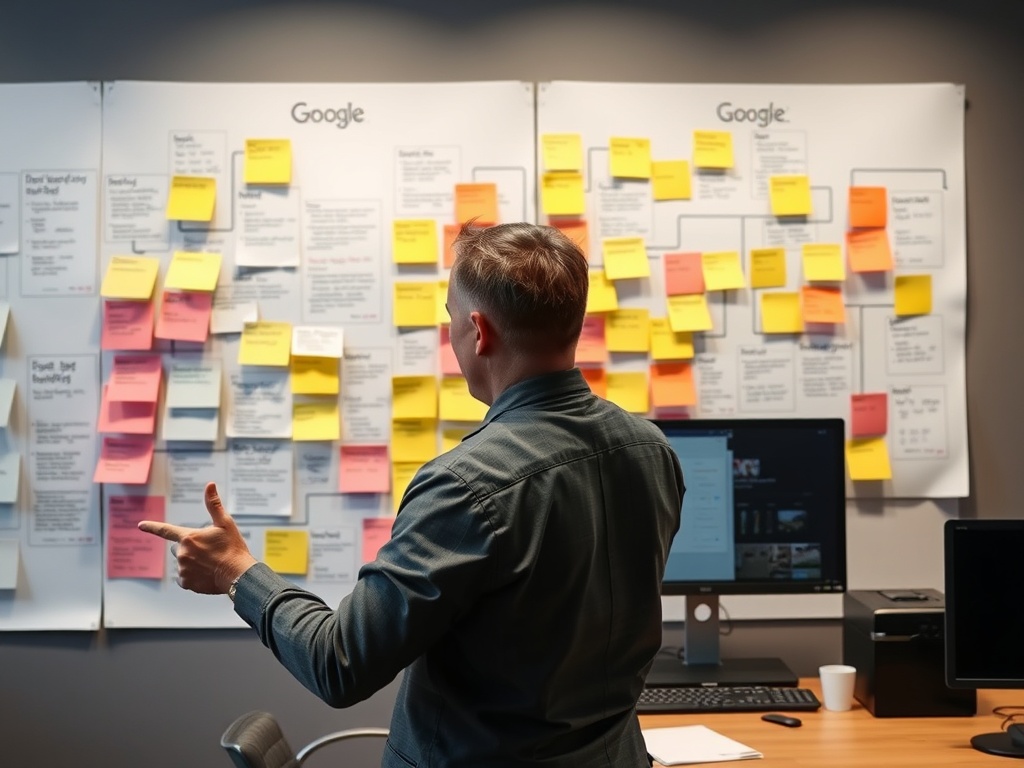
A clean sitemap can help discovery, but Google states that submitting a sitemap is a hint rather than a guarantee. That is why sitemap submission should support a sound site structure, not replace internal links or a crawlable architecture.
How budget, workflow, and skill level affect the fix
A solo publisher should start with a narrow diagnostic list: status code, noindex, canonical, sitemap, internal link, and page quality. An agency or larger team can add log analysis, crawl simulations, template audits, and content consolidation. The key is to match effort to the failure point. A five-page site rarely needs enterprise crawl analysis; a 50,000-page site probably does.
This is similar to choosing a practical file process in a PDF workflow FAQ. You do not need the most complex tool first; you need the tool that matches the stage of the process. Beginners publishing on WordPress may also want the basics in WordPress 101 before diagnosing advanced search problems.
Timing also matters. A new or recently changed URL may need time to be crawled and processed, but waiting is not a strategy when basic signals are broken. If Search Console reports that a page is blocked by robots.txt, marked noindex, redirected unexpectedly, or canonicalized to a different URL, fix the signal before requesting validation. If everything is technically clean, then patience and monitoring are reasonable.
For ranking work, document the target query, the competing pages, and the searcher's likely task. A page about pricing, a troubleshooting page, and a beginner guide may all mention the same phrase, but they serve different intents. Matching intent usually produces a better improvement plan than adding keywords to a page that was built for a different job.
Be careful with paid ads and analytics while diagnosing the issue. Paid visibility can prove that users respond to a page, but it does not prove organic indexability. Analytics can show visits, but it cannot explain every crawler decision. Keep technical evidence, search performance evidence, and business performance evidence in separate notes so the remedy stays clear.
A helpful reporting habit is to label each issue by stage: discovery, crawling, indexing, or ranking. This makes status updates clearer for non-technical stakeholders. Instead of saying 'SEO is broken,' you can say 'Google can crawl the page, but the canonical points elsewhere' or 'the page is indexed, but the query intent is stronger on competing pages.'
Choose the right SEO repair path
Use indexing fixes when the page is excluded, blocked, duplicated, orphaned, or recently published and not yet discovered. Use ranking fixes when the page is indexed but not competitive for the query. If you are unsure, confirm the URL status first. That one step prevents wasted edits and gives the rest of the SEO work a clear direction.
For homes and offices that depend on connected devices to publish, monitor, and troubleshoot sites, a stable network also matters. A guide on how to connect smart devices without overwhelming your network can help keep basic infrastructure from becoming a hidden productivity problem.